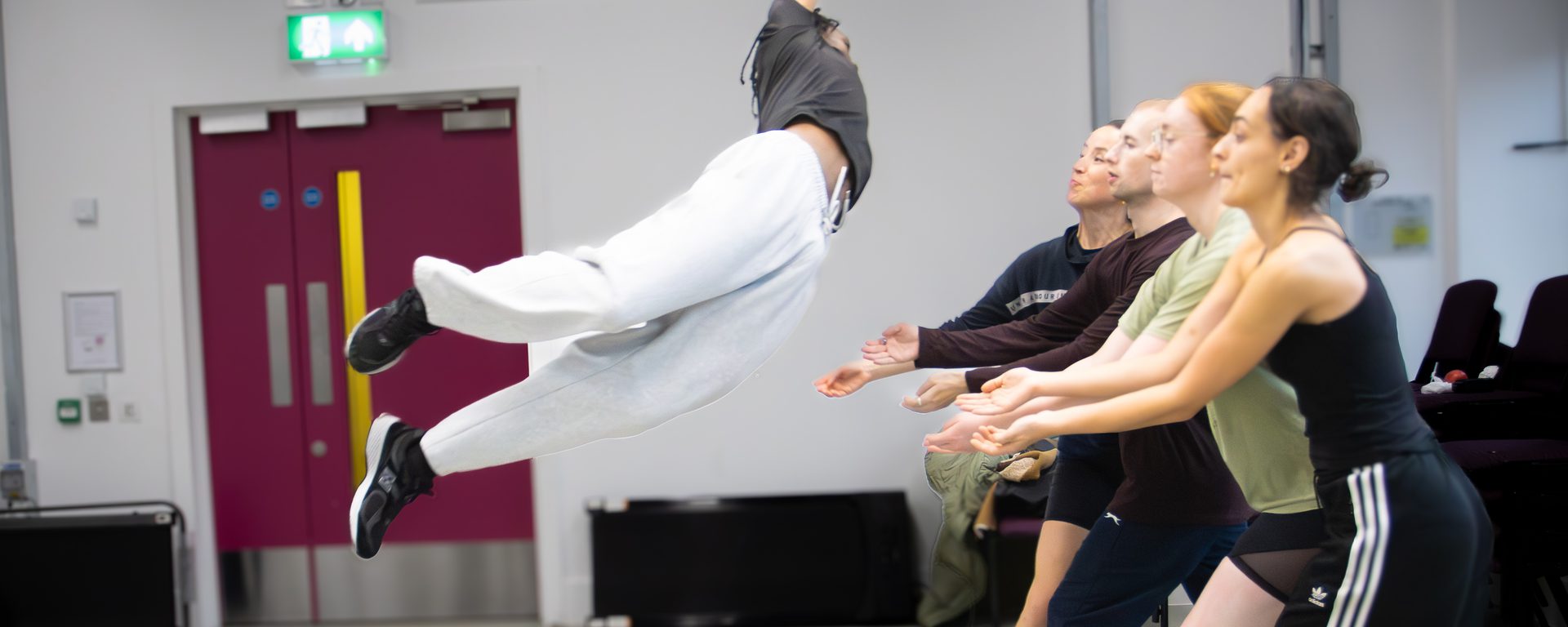
How do you come up with a task/exercise?
Practitioner Krista Vuori says, ‘Task/Exercise creation for me works in three ways I can currently think of. It is either bound to what it needs to accomplish in the rehearsal, so I must understand what its function / purpose is. And sometimes of course, I might not know at all so will show up with an idea to try out that is not structured and that can be very freeing. Thirdly, I look at the vast pool of tasks I have used in the past (or other people have used) and redevelop a new one out of the old ones, if it feels like there’s potential. You don’t have to re-invent the wheel every time.
I come up with creative tasks and exercises sometimes by accident! - I start something in rehearsals that is not a clear task, but there might be something interesting, so I keep exploring. At some point you might realise there is an exercise emerging, a pattern that you can develop and build in clear rules for and create your building blocks for it.
If I am working with text, I look at any words or places mentioned within the text that I can translate into a movement idea, physicality or a game. For example, words like “falling’ “interruptive” “factory” “hiding “, indicate potential physical actions to me. I would decide if it were a solo, duet or group or whole ensemble task and create 2-3 steps to start with. ‘Factory’ gives me a rule of repetition in the movement. Thinking about what kind of factory, gives me specific actions and dynamics to study. Step 1 could be to research the factory workers and their movements. Step 2, string 5 actions together from the research. Step 3 - Could be to explore with effort qualities such as light, heavy, fast, slow etc…
I also often use images to inspire a task. I search for images that offer a sense of movement, action or evoke a feeling. A task could be to select 5 images and Step 1; create the journeys that happen between the images. Rather than recreating the images, you create the moments that are not visible, what happens in between the images. Step 2 - decide the pace in which you do the journey. Step 3 - Decide on a quality in your movement (you might be heavy, light, sharp or glide through the space, for example)
It is often beneficial to have clear but restrictive rules to work within.’
This last point from Krista is important. You need to set some parameters as it is often these restrictions that bring out our more creative, innovative responses.